Understanding the true cost of ownership and the differences across holiday homes on a holiday park and a traditional bricks and mortar property within a community.
When considering holiday home ownership, pitch fees are often compared to the ongoing costs of owning a traditional bricks-and-mortar property. While the structures are different, both involve regular financial commitments that contribute to the overall cost of ownership.
Holiday park pitch fees typically cover the use of land, park maintenance and shared services, while traditional property ownership includes costs such as council tax, property maintenance and household running expenses. Comparing these side by side can help you better understand value, predictability and long-term financial commitment.
It can also be helpful to consider how each ownership model is treated in terms of resale and long-term financial expectations.
Holiday Park Pitch Fees
Overview
Pitch fees are an annual charge paid to the park operator for the use of the land and the services provided within the park. They form a key part of the overall cost of holiday home ownership.
Key Characteristics
- Annual fee payable to the park operator
- Covers use of the pitch and park infrastructure
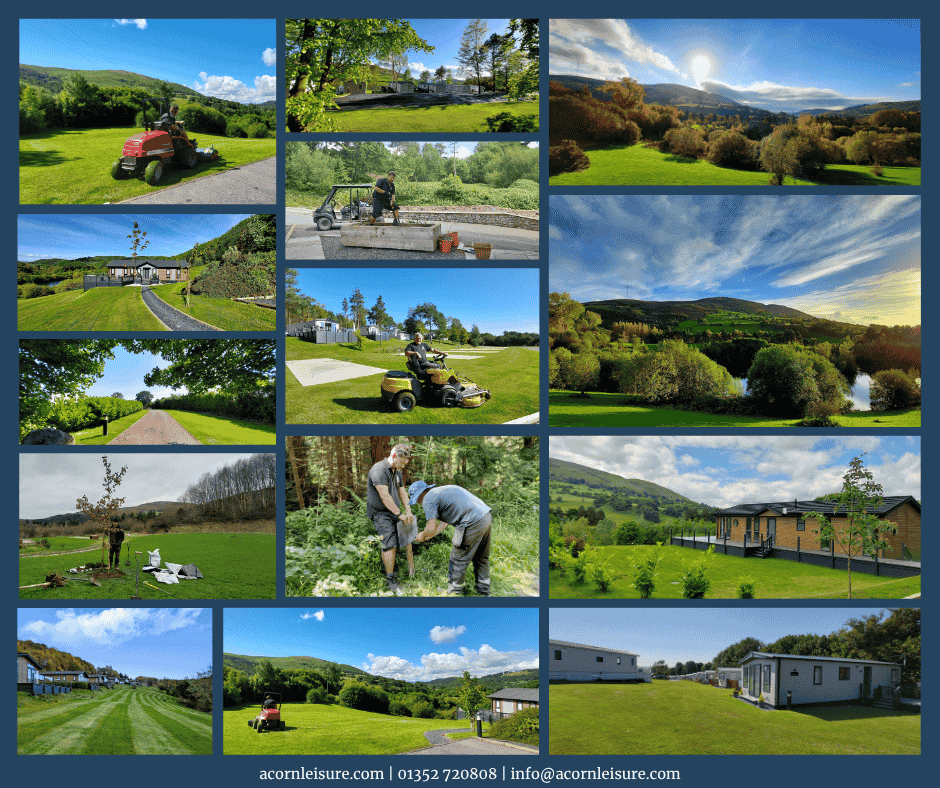
- Often includes grounds maintenance and landscaping
- May include security, lighting and communal upkeep
- Utilities (electricity, gas, water) usually charged separately
- Costs are typically fixed annually (subject to review)
- No council tax in the same way as a primary residence
- No responsibility for external land maintenance beyond your plot
- Designed to support a managed, leisure-focused environment
- Resale typically handled through the park operator
- Resale typically handled through the park operator, with an industry-standard commission payable
- Value influenced by age, condition and market demand
- Holiday homes are generally not treated as traditional appreciating property assets
- Ownership is focused more on lifestyle use than capital growth
- Benefits from planning & local authority licencing for holiday homes
Bricks & Mortar Property Costs
Overview
Owning a traditional property involves a wider range of ongoing costs, many of which are variable and linked to internal and external maintenance, taxation and long-term upkeep.
Key Characteristics
- Council tax payable to the local authority
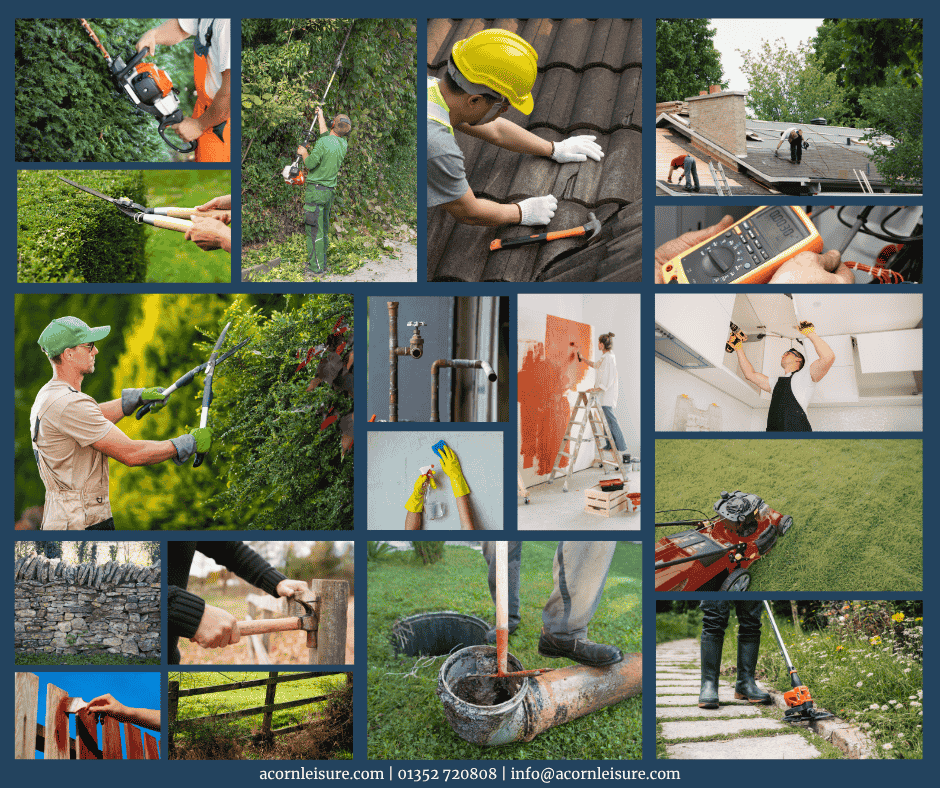
- Ongoing maintenance and repair costs (internal and external)
- Responsibility for structural upkeep of the property
- Infrastructure costs eg:- drains/sceptic tank, boundary walls & hedging
- Potential second home council tax premiums (if applicable)
- Garden and external area maintenance responsibility
- Costs can vary depending on property condition and age
- Greater long-term financial exposure to repairs and upgrades
- Designed for full-time residential living
- Property may increase or decrease in value depending on market conditions
- Potential for capital growth over time (not guaranteed)
- Subject to capital gains considerations on second homes (where applicable)
- Sale of a property typically involves estate agency fees and legal costs, which can vary depending on the property and market conditions
- Often viewed as a long-term financial asset as well as a place to live
- In some locations, second home ownership can form part of broader local housing and community discussions