When Nature Teaches Us About Continuity
July has rewritten the weather records here at Maes Mynan Park in North Wales, as well as the rest of the UK.
Fifty years ago, Britain experienced what many still remember as the legendary summer of 1976. Half a century later, we find ourselves talking once again about prolonged sunshine, soaring temperatures and parched landscapes, no rain to speak of. Yet, this July has, in places, surpassed even those long-remembered days.
Here at our North Wales countryside holiday park, we’ve been watching the season unfold in ways we’ve never seen before.
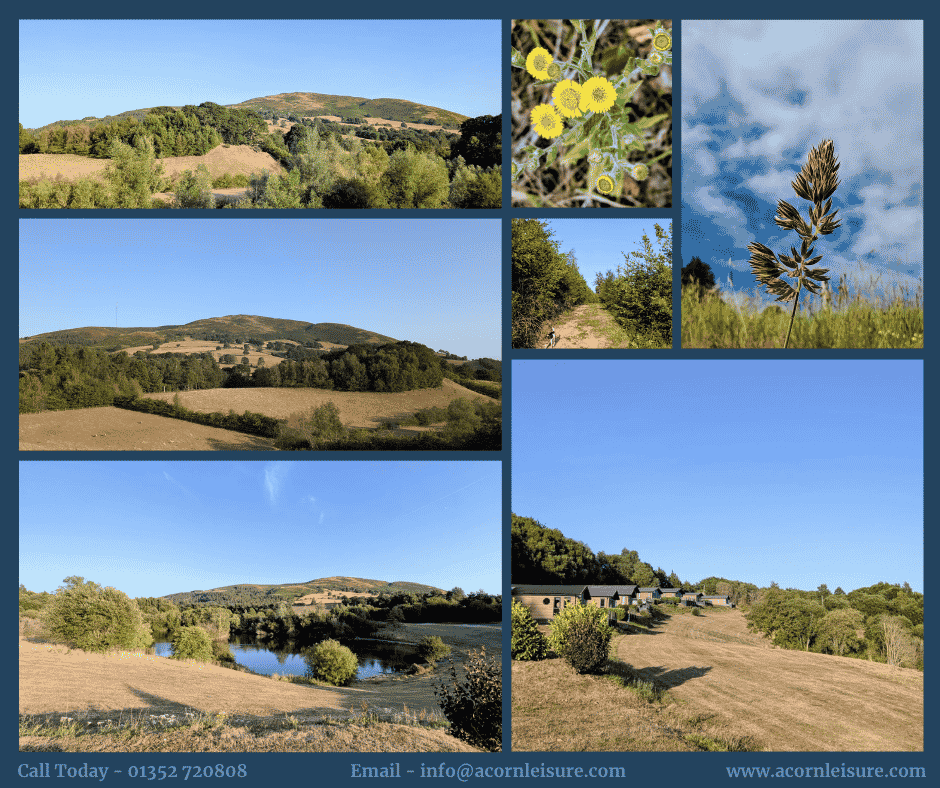
If you own a holiday home here at Maes Mynan Park, July becomes your story too. This nature’s journal is not something you just read about, it’s your experience too, a place you return to, season after season, noticing what has changed and what endures. Nature inspires us all in different ways.
A Landscape Adapting – Nature Finds a Way
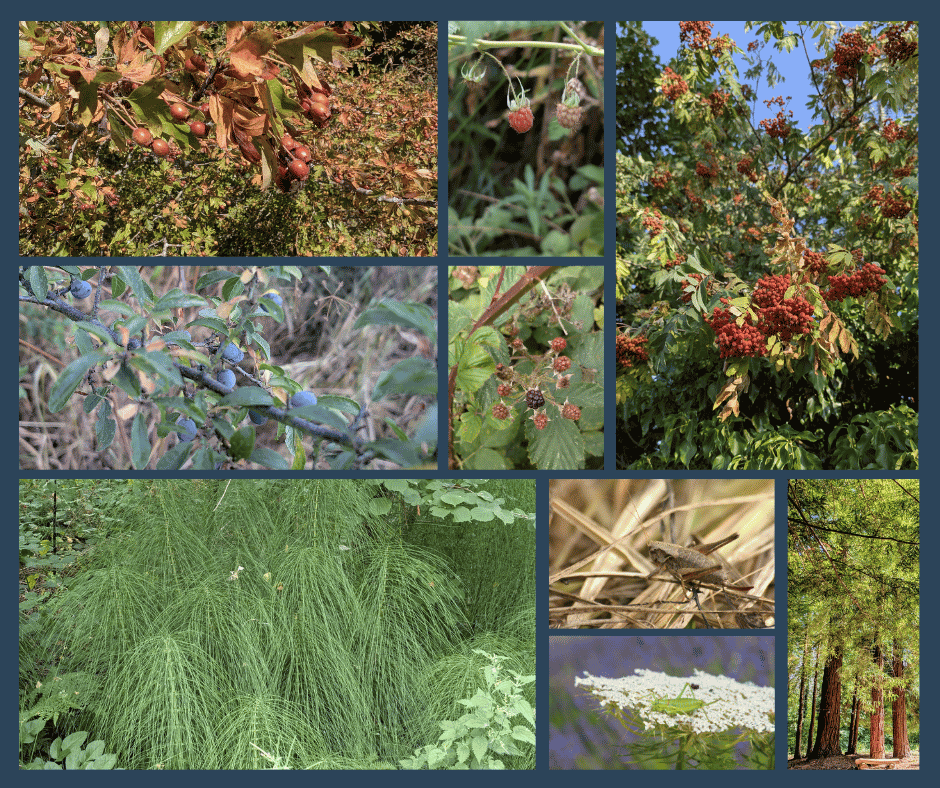
The grass around Maes Mynan Park has faded from vibrant green to golden straw. The ground beneath the woodland and Sequoia grove crackles beneath your feet, and even the trees appear to be conserving their strength. Blackthorn hedgerows already carry tiny sloe berries weeks ahead of their usual schedule, while the rowan trees have produced their brilliant scarlet berries early, many already beginning to shrivel beneath the powerful sun. Even the hawthorn seems to sense that the seasons are running ahead of themselves. Its familiar haws have begun to blush long before autumn has arrived, while the sun-burnished leaves hint at weeks of relentless heat. Nature is adapting, as it always does, but one cannot help wondering what these early signs might mean for the birds that will depend upon this harvest in the months to come.
Wild raspberries that line the paths to the Sequoia grove are small and challenging to find this year, whereas the blackberries tell their own story of this extraordinary summer. Some have already ripened into deep purple weeks ahead of their usual time, while others have stalled, their fruit remaining small where the ground has become dry and hard. Yet along the cool, damp banks beside the streams and irrigation ditches of the Acorn & Giants woodland pathway, the brambles seem content to wait, sheltered from the worst of the heat before bursting into colour when their time is right.
Many of the apples are falling long before they have fully ripened. Faced with prolonged dry conditions, the trees appear to be shedding part of their crop to conserve precious moisture for the fruit that remains.
Even the ferns, usually so lush beneath the woodland canopy, are beginning to wilt. Their graceful fronds, which normally thrive in cool shade, are showing that even the deepest woodland has not escaped this prolonged dry spell.
By contrast, the ancient Mare’s-tail seems almost indifferent to the drought. Along the damp edges of woodland paths and beside the streams, its slender stems continue to flourish, quietly reminding us that where water remains, life quickly follows.
The combination of warm days and humid nights has also encouraged patches of powdery mildew to appear on the young oak leaves. Although seldom fatal, this delicate white coating is another reminder that unusual weather brings unexpected challenges throughout the woodland.
Across the sun-bleached fields, the songs of grasshoppers and crickets seem louder than ever, filling the warm air with the unmistakable soundtrack of high summer. The grasses have turned to gold beneath the relentless sun, and among them the resilient thistles continue to flower, although even these hardy survivors now bow their heads beneath the weight of the heat.
Nature, however, is remarkably resilient.
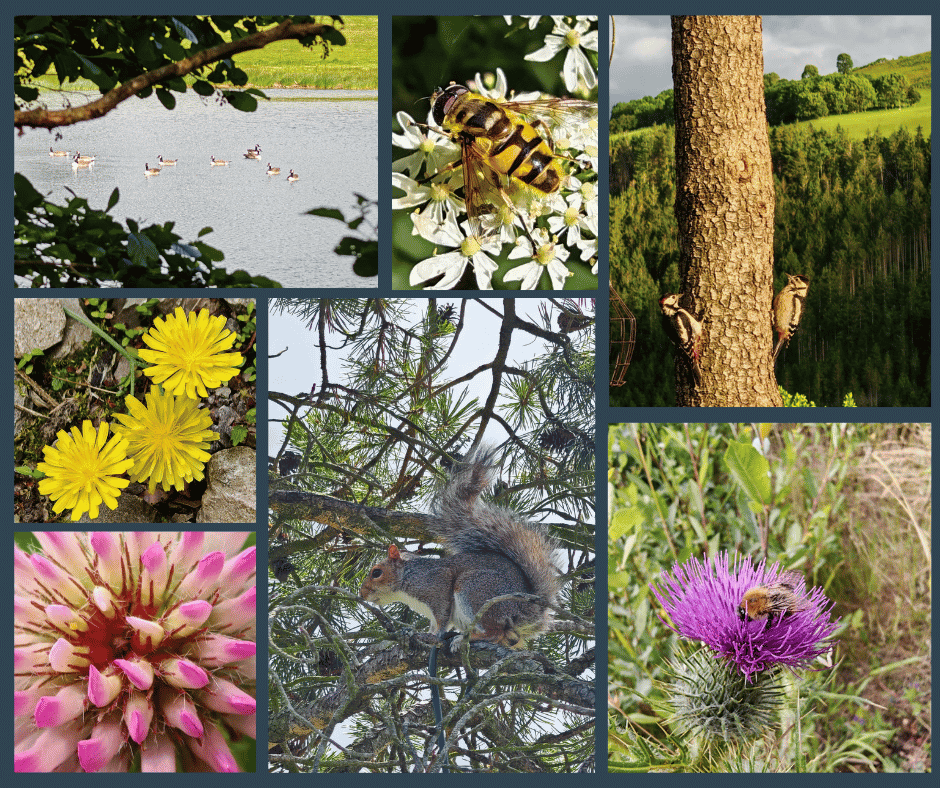
While some plants struggle, others seize their opportunity. The bold yellow spikes of ragwort rise confidently above the faded grasses, standing almost defiantly among the drought. Often dismissed because of its poisonous nature to grazing livestock, ragwort is, in fact, one of Britain’s most valuable wildflowers for insects, providing food for dozens of species of bees, hoverflies and moths. Nature has an extraordinary way of reminding us that things are rarely as simple as they first appear.
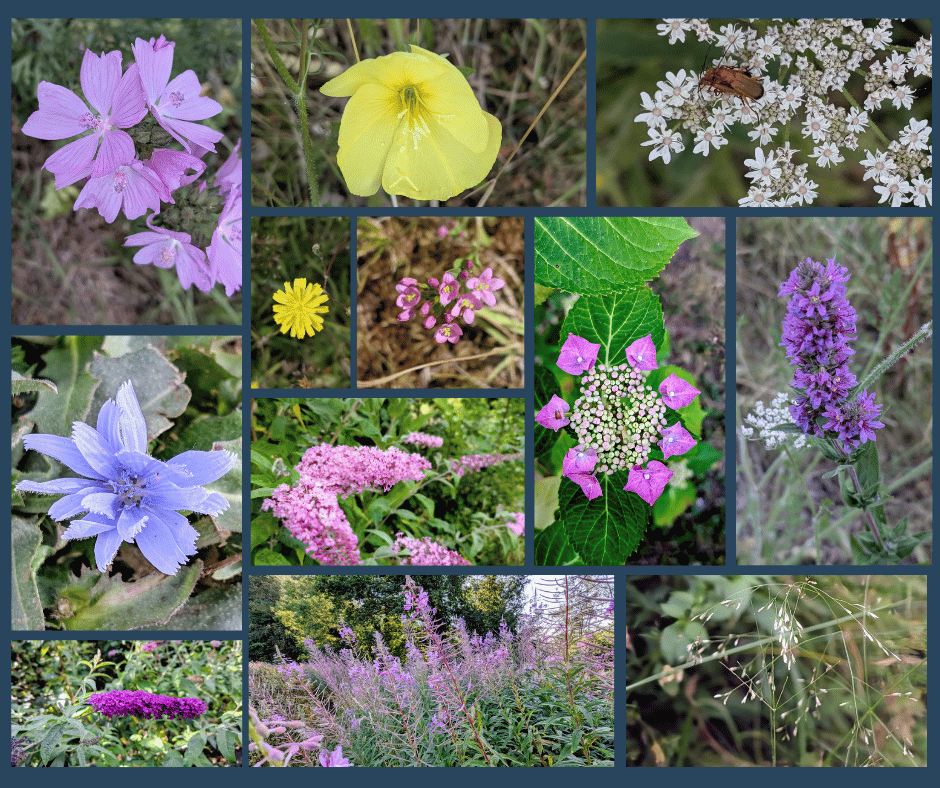
Among the faded grasses, another splash of yellow catches the eye. Common Fleabane seems almost unaffected by the never-ending heat, its tiny golden flowers shining like miniature suns against the drought-parched landscape. Once scattered across cottage floors in the belief that it repelled fleas, today it serves a different purpose, providing valuable nectar for bees, hoverflies and countless other insects when many other wildflowers have already begun to fade.
Nestled among the dusty verge, I came across a single Chicory flower. Frequently called the ‘Wayfarer’s Flower’, it has watched travellers pass along country lanes for centuries, opening its delicate blue petals with the morning sun before quietly closing again as the afternoon heat builds. Despite the drought and the harsh roadside conditions, this solitary bloom had found a way to flourish. Perhaps that’s another of nature’s gentle lessons. Beauty doesn’t always seek the easiest place to grow. Sometimes it chooses the hardest, quietly reminding us that resilience can be every bit as remarkable as perfection.
Perhaps there is a lesson in that.
In a world that often feels dominated by uncertainty, politics, conflict and headlines that rarely bring comfort, the countryside continues quietly with a rhythm of its own. Seasons still change. Flowers still bloom. Birds still raise their young. Life simply adapts and carries on.
Perhaps that is why so many people find themselves longing for places where they can step away from the noise and simply breathe.
The Fragrance of a Summer Morning
Before the eye notices July, the nose frequently discovers it first.
Early mornings and warm evenings at Maes Mynan Park are filled with the unmistakable perfume of wild honeysuckle, weaving its way through the trees along the stream and woodland paths. The heat intensifies its fragrance until it gently drifts through the woodland on the slightest breeze.
For a fleeting moment, you can almost imagine yourself walking through a Mediterranean village where jasmine scents the warm evening air.
Yet, this is not Tuscany or Provence.
This is North Wales.
One of nature’s greatest gifts is that it awakens memories we had forgotten we possessed.
Summer’s Survivors
July is no longer about the first flowers of spring.
It is about those plants that quietly endure.
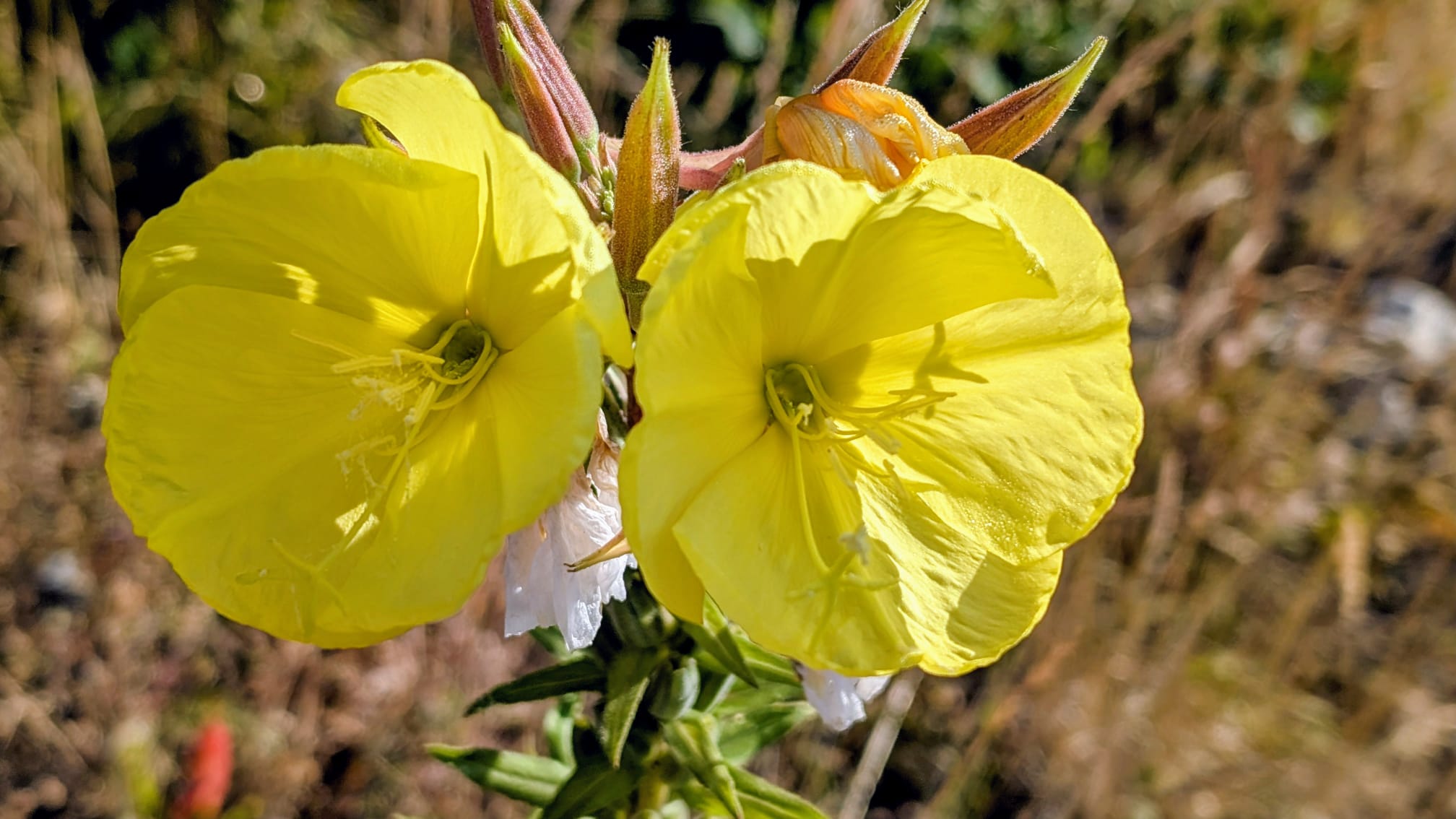
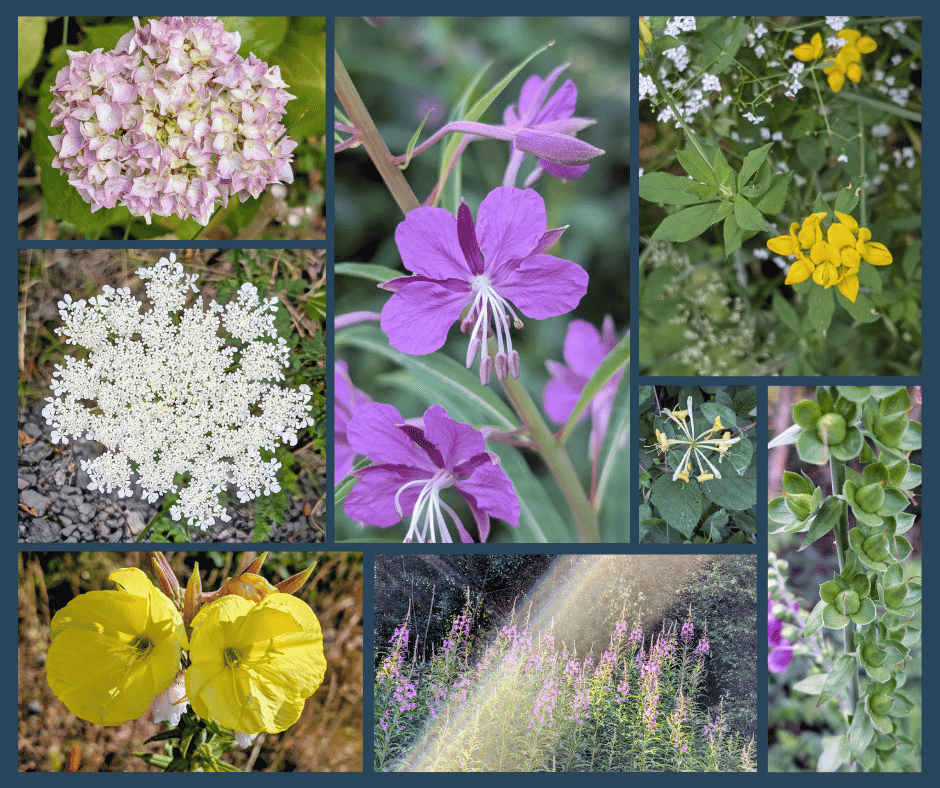
Along the rough and uncrowded banks, the Evening Primrose shines like little golden lanterns. Their large lemon-yellow flowers wait patiently until late afternoon and evening before fully opening, which earned them the Victorian nickname The Evening Star. Native Americans valued the plant for its medicinal properties centuries before Europeans arrived, and today its oil continues to be widely used in herbal medicine. Standing tall above the banks, they seem to glow in the fading light, quietly guiding walkers home.
Nearby, elegant stems of Rosebay Willowherb sway gently in the warm breeze. Once known as Fireweed, it became famous after the Second World War, when it was one of the very first wildflowers to colonise bomb sites across Britain. Long before buildings were rebuilt, Rosebay Willowherb had already begun restoring life. Few flowers symbolise resilience more beautifully.
The rich purple and pink sprays of Buddleia, often called the Butterfly Bush, have become magnets for butterflies, bees and hoverflies. Alongside them, the sweet vanilla scent of Hemp Agrimony drifts along the Acorn & Giants woodland path. Although its flowers are understated, it is one of Britain’s finest nectar plants, drawing clouds of insects throughout the summer.
Then there is Yarrow, sometimes overlooked among the grasses. Ancient herbalists knew it as Soldier’s Woundwort, believing Achilles himself used it to heal wounded warriors during the Trojan War. For centuries, it symbolised healing, protection and endurance.
Nature has always carried stories, long before people began writing them down.
Beauty Doesn’t End — It Evolves
One of the greatest lessons July teaches us is that beauty doesn’t disappear.
It simply changes.
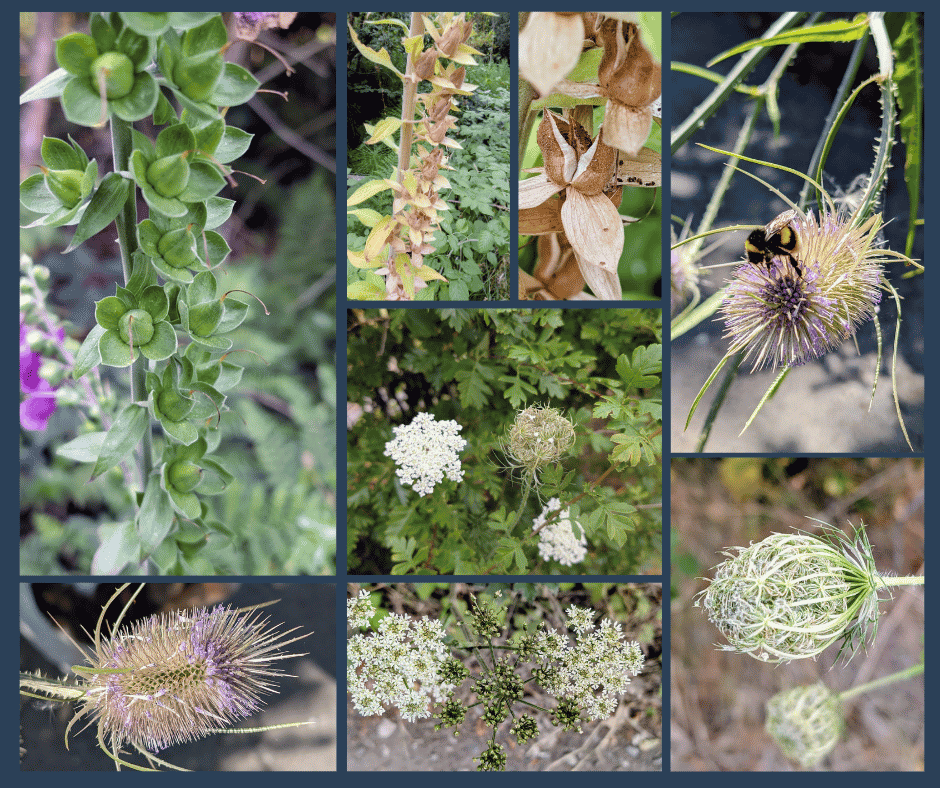
The magnificent foxgloves that lined the woodland paths only a few weeks ago have now transformed into elegant towers of green seed pods. Looking closely, they resemble tiny lanterns stacked one above another, each holding thousands of seeds that will one day become another generation of foxgloves.
Their flowers may have gone.
Their purpose has only just begun.
The same is true of the cow parsley. Its delicate white flowers have curled into intricate seed heads that resemble lace sculptures suspended in midair.
The hydrangeas, despite the dry conditions, continue to surprise. Their blooms emerge slowly from tightly packed buds, each flower unfolding like a miniature firework frozen in time.
The teasels too have become architectural masterpieces. Their paired leaves collect tiny dew drops in their natural cups, something subtle for the smaller insects. Country folklore once believed fairies used these pools to drink from on warm summer mornings, earning them the affectionate nickname Fairy Baths. The bees and butterflies love the teasel’s tiny purple flowers, which bloom gradually along their oval shapes.
Occasionally, it’s the smallest details hold the greatest wonder.
Nature in Circles
Last month we explored the hidden mathematics of nature.
This month, nature gently reveals another of its favourite designs.
Circles.
Once you begin looking, they seem to appear everywhere.
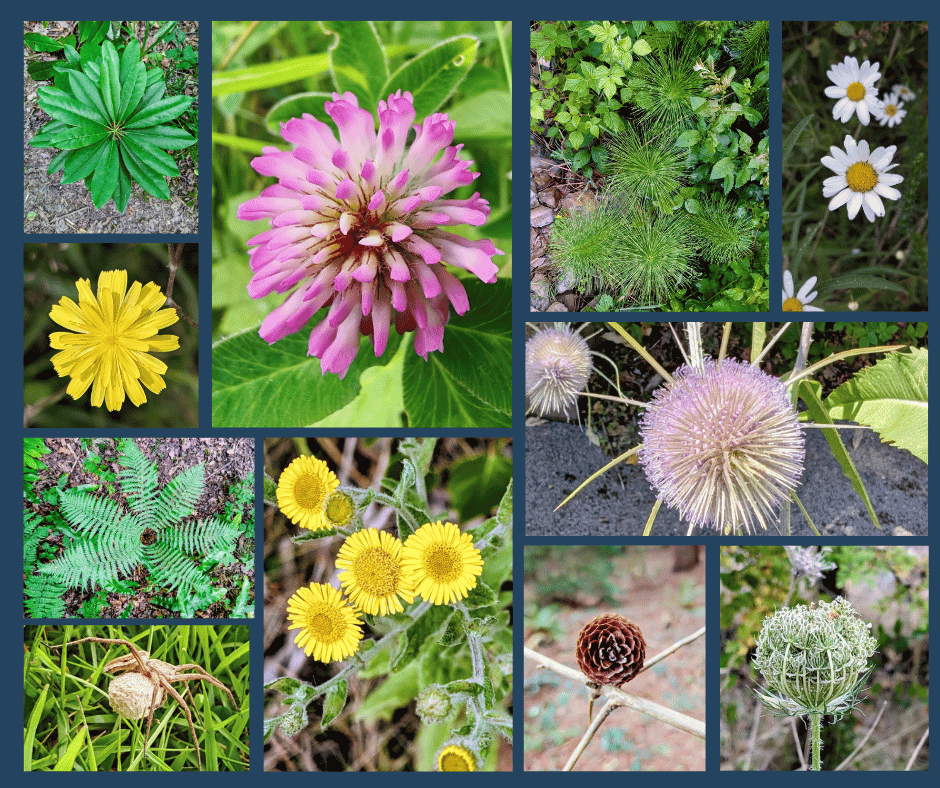
The perfect globe carried by a nursery spider as she protects the next generation. (photo from WH)
The tightly packed centre of a hydrangea before it bursts into bloom.
The neat spheres of clover flowers.
The circular seed capsules of poppies.
The delicate bowls formed by drying cow parsley.
The radiating spokes of young pine needles beneath the Sequoias.
The central middle of a spiralling group of fern.
Then I came across some Common Fleabane with its hundreds of tiny golden rays packed tightly and perfectly together, almost like a miniature sun making a perfect circle, a dial of vibrant yellow.
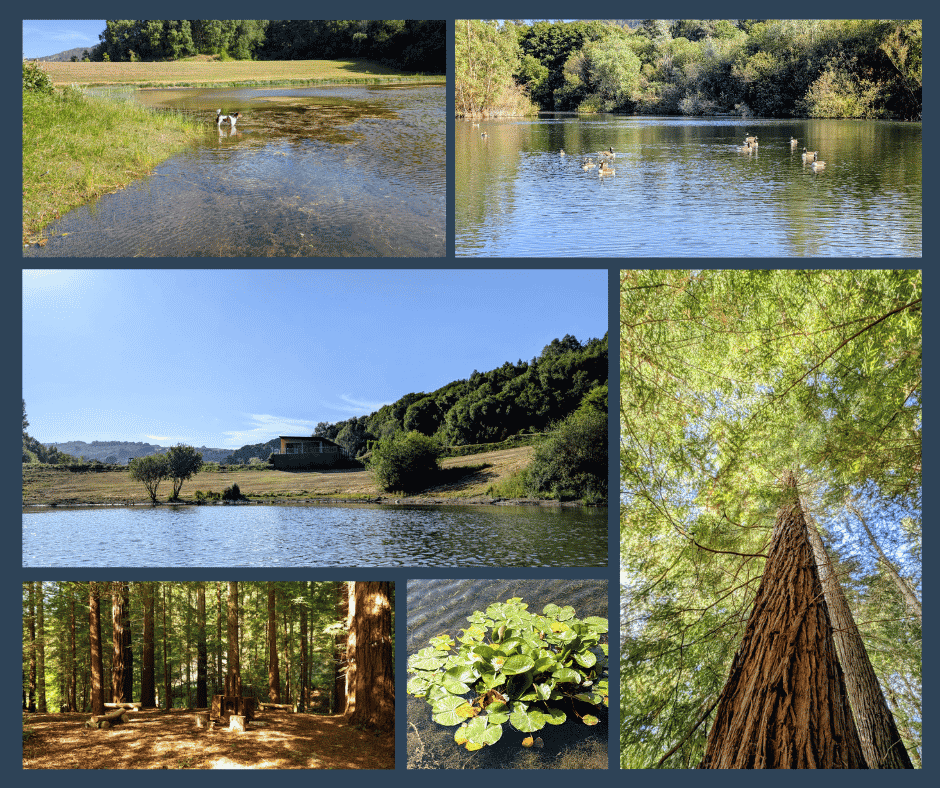
The lake has its own language, spoken not in words but in circles. A coot slips beneath the surface, leaving widening rings that drift silently across the water. A fish rises for the briefest moment, drawing another perfect circle before disappearing once more into the depths. Canadian Geese and the occasional Greylag glide effortlessly across the lake, their gentle wakes curving through reflections of sky and woodland. Above them, House Martins weave graceful arcs as they swoop low to gather insects from the water’s surface. Circles become ripples, ripples become reflections, and every movement quietly reminds us that nothing in nature happens in isolation. One small moment touches another, until the whole landscape seems connected by the gentlest of patterns.
Nature rarely works in straight lines.
Instead, it moves in circles.
Life follows seasons.
Flowers become seeds.
Seeds become flowers.
Ripples fade, only for another to begin moments later.
Perhaps circles are nature’s quiet reminder that endings are never quite endings at all.
They are simply beginnings we haven’t recognised yet.
Nature’s Life Continues
Despite the heat, the wildlife at Maes Mynan Park continues its familiar summer routines.
The young hares are becoming increasingly confident, often appearing unexpectedly near the park office before disappearing once more into the long grasses, where their hidden forms become almost invisible.
Grey squirrels perform their acrobatics effortlessly through the pine trees, while Great Spotted Woodpeckers continue visiting the mature trees. (photos by WH).
As evening falls, the badgers begin their familiar journeys towards the lakes, quietly following paths they have walked for generations.
Dragonflies patrol the water’s edge with dazzling flashes of electric blue.
Above them, house martins skim gracefully across the lakes, collecting insects on the wing before touching the water so lightly they leave only the faintest rings behind.
Everything follows its rhythm.
Everything knows where it belongs.
A Thought from Maes Mynan Park in North Wales This Month
For our holiday homeowners, the rhythm of the seasons becomes part of life. You don’t have to chase it or plan it. You simply open the door, and it’s there.
Perhaps this suggests we spend too much of life searching for certainty.
Nature never promises certainty. Only seasons.
A flower blooms.
It fades.
It leaves seed.
The seed waits.
Then, without fuss or fanfare, life quietly begins again.
Perhaps this is why time spent in nature feels so restorative. It gently reminds us that life is not measured by how fast we move, but by how deeply we notice. And perhaps that is the greatest luxury of all.
So as I wandered through Maes Mynan Park this month, I couldn’t help noticing that yellow had become the colour of resilience. Ragwort, Evening Primrose, Bird’s-foot Trefoil and Common Fleabane all seemed to flourish where others struggled. For me, this says nature has its own quiet way of reminding us that every season produces its own survivors, which is probably an invaluable wellbeing lesson for us all to remember, too.
Returning to What Matters
As July slowly gives way to August, nature quietly reminds us that nothing is ever truly finished.
The foxglove leaves behind seed for another summer.
The cow parsley folds itself into delicate sculptures.
The water lilies spread a little further across the lake each day.
Young hares grow bolder, squirrels prepare for autumn, and beneath the woodland canopy countless seeds are already planning next year’s display.
Perhaps this is why owning a holiday home in the North Wales countryside feels so different from simply taking a holiday.
You don’t simply visit.
You become part of the seasons themselves.
Not only that, but you begin to notice the first cuckoo of spring, the scent of honeysuckle on warm July evenings, the arrival of autumn colours and the quiet anticipation of winter before everything begins once again.
At Maes Mynan Park, nature is never standing still.
Every walk reveals another story.
Every season offers another lesson.
Every return feels like coming home to a landscape that has been quietly waiting for you.
That is the true gift of a countryside retreat.
Not escaping life — but rediscovering its natural rhythm, in a place that’s yours to return to, whenever you need it most.
This is what owning a countryside holiday home gives you: not a postcard moment, but a living, breathing relationship with a place that teaches you something new every time you return.
If you’re ready to own a countryside retreat that gives you what you need to switch off and recharge, we’d love to show you what’s available at Maes Mynan Park and Misty Waters Holiday Park. A holiday home gives you the opportunity to create your very own Lifestyle Bubble and a space that allows you to breathe? Please get in touch if the timing is right for you.
Maes Mynan Park – a hidden gem with stunning views, lakeside lodge plots and elevated static caravan holiday home plots. 4-miles from junction 31 of the A55 North Wales Expressway.
Misty Waters Holiday Park – a quiet countryside holiday park with large open green spaces and big skies. 1-mile from junction 31 of the A55 North Wales Expressway.
acornleisure.com | 01352 720808 | info@nullacornleisure.com | Contact Page | Holiday Homes For Sale
Many thanks to WH, DL, SL & JK for this month’s inspiration via their photos and observations for our Nature’s Notes series of posts.
Photo Credits WH, LB & VW. Film credit DL.
Frequently Asked Questions Answered.
What makes a countryside holiday park different from a traditional second home? A countryside holiday park like Maes Mynan Park in North Wales offers immediate access to nature and wellbeing without the maintenance burdens of a brick-and-mortar property. Owners become part of seasonal rhythms—hearing the first cuckoo, watching hares at dawn, breathing honeysuckle on July evenings—while luxury holiday homes for sale provide turnkey tranquillity and a true escape.
Why choose North Wales for a luxury holiday home?North Wales combines dramatic natural beauty with easy access from the A55 Expressway. Parks like Maes Mynan offer lakeside lodge plots, mature woodlands, and stunning views in a setting designed for wellbeing and peace. You’re minutes from major routes yet immersed in timeless countryside, ideal for switching off and recharging.
How does nature support wellbeing at a holiday park?Spending time in nature resets your rhythm. At Maes Mynan Park, seasonal changes—wildflowers, migrating birds, the scent of honeysuckle—invite you to slow down and notice. Research shows green spaces reduce stress and improve mental clarity. A countryside holiday park becomes a ‘lifestyle bubble’ where wellbeing and nature are woven into daily life.
What are the benefits of owning versus renting a holiday home?Ownership at a countryside holiday park means you return to your own sanctuary whenever you need it, without competing for rental availability. Luxury holiday homes for sale at Maes Mynan Park are exclusively for private use—no subletting—so you enjoy consistent tranquillity, build deeper connections with the landscape, and create a true second home, not a transactional stay.