
Learning to See the Wonders of Nature
Nature’s Notes for June from Maes Mynan Park explores changing wildlife, woodland flowers, birds, and insects. It includes interesting synergies between nature and mathematics that work in harmony to highlight the wellbeing benefits of spending time in nature in North Wales. Perfect for those looking for a holiday retreat in nature.
Let’s just put it out there: Weather this June has certainly kept us guessing!
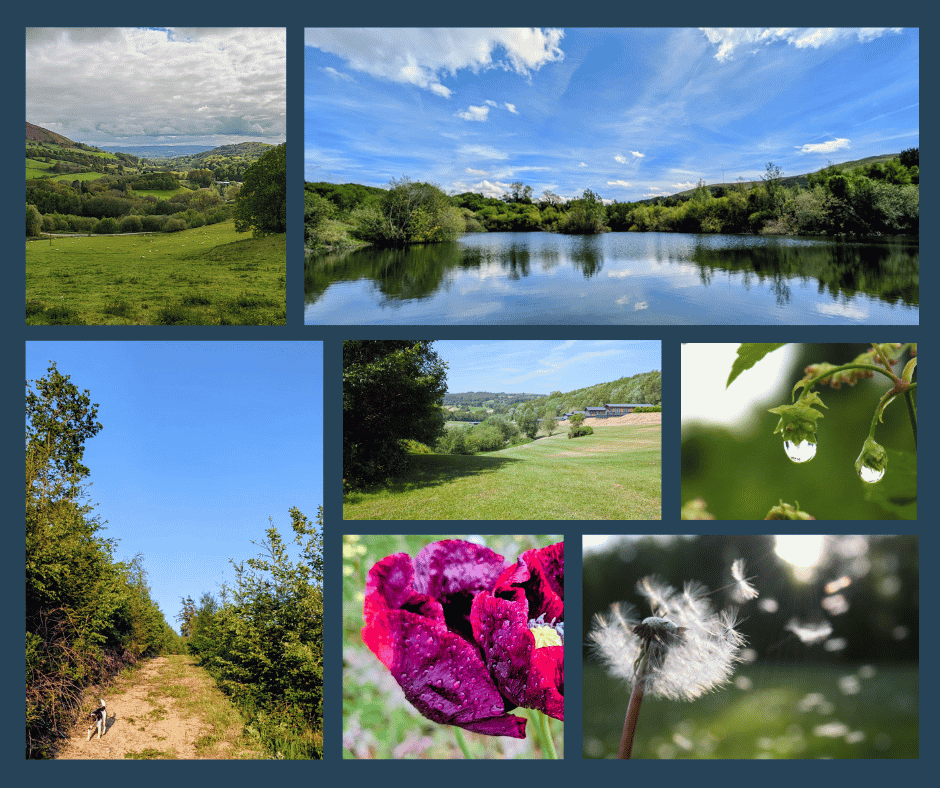
Weather-wise, it has been something of a rollercoaster. One day, we’ve reached for another jumper as cool winds swept across Maes Mynan Park and the Clwydian hills, the next we’ve searched for sunglasses as summer turned up the thermometer. Rain, sunshine, gusting winds and warm evenings have often arrived within hours of each other, reminding us just how wonderfully unpredictable a British summer can be. All seasons in one day was a common thought this June!
Now, as another mini heatwave approaches towards the end of the month, Maes Mynan Park seems to have settled into itself. Everything is growing and flowering. Everything seems alive and bursting with energy.
And perhaps that is June’s greatest gift. It teaches us to slow down long enough to notice.
It’s a Bug’s Life
For many people, insects are simply tiny creatures that buzz past unnoticed. Yet they’re one of the biggest indicators of a healthy landscape. Spend a little time in nature, and you quickly realise they are the beating heart of the countryside.
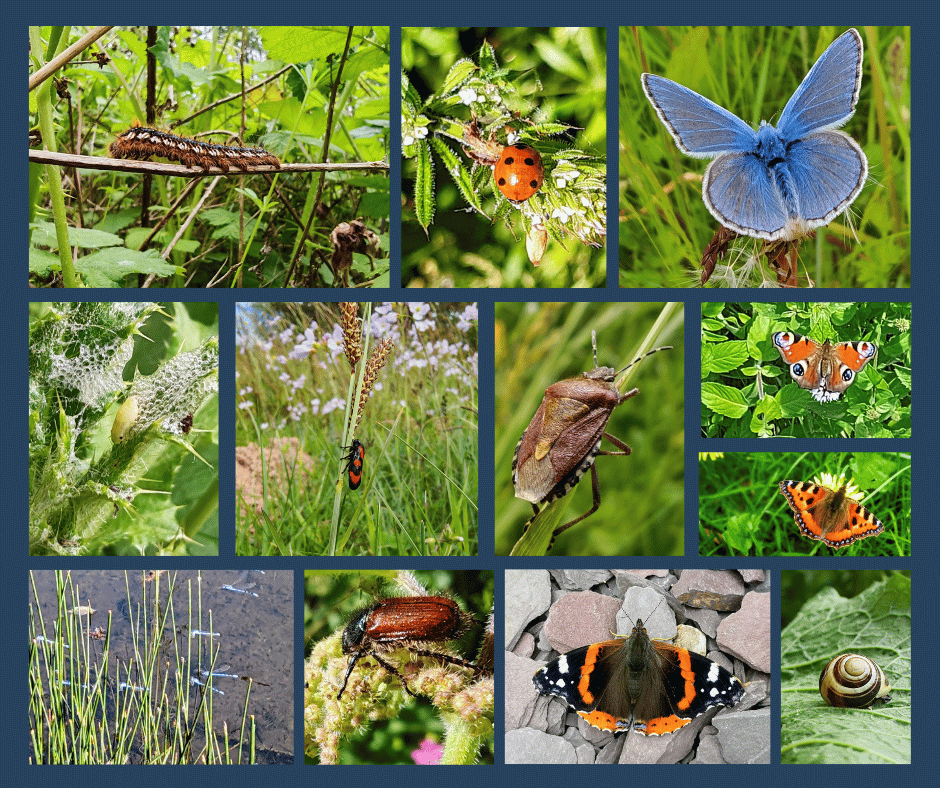
Blue damselflies hover like tiny jewels above the lakes, while dragonflies patrol the water with effortless precision. Mayflies dance in the evening sunshine, reminding us how fleeting life can be, while bees move patiently from flower to flower carrying out one of nature’s most important jobs. Pollen, weighing their legs down as they feast on all the jewels the summer flowers offer.
The humble bee is one of nature’s great unsung heroes. From the smallest wildflower to towering woodland trees, bees quietly pollinate the plants that sustain our countryside. Every visit from flower to flower helps create the seeds, berries and fruits that feed birds and wildlife, ensuring each season follows the last. Their gentle hum is more than the soundtrack of summer, it is the sound of a healthy, thriving landscape.
As a bug life goes Maes Mynan Park has lots to share and one of our holiday homeowners recently shared some wonderful photographs of these tiny residents of the park. Looking closely at them through a camera lens reveals an extraordinary world of colour, delicate wings and intricate detail that often escapes the naked eye.
Without insects there would be no wildflowers, no berries, fewer birds and a much quieter countryside. Tiny lives perhaps, but absolutely essential ones.
Poppies – Nature’s Celebration
Few flowers capture the spirit of early summer quite like the poppy.
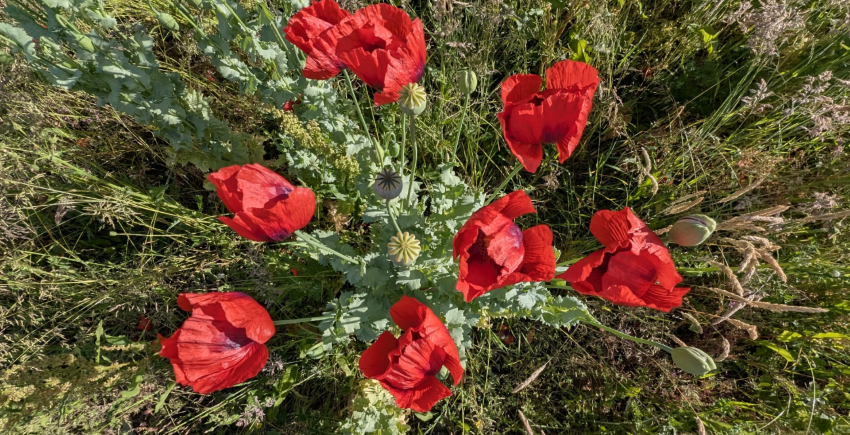
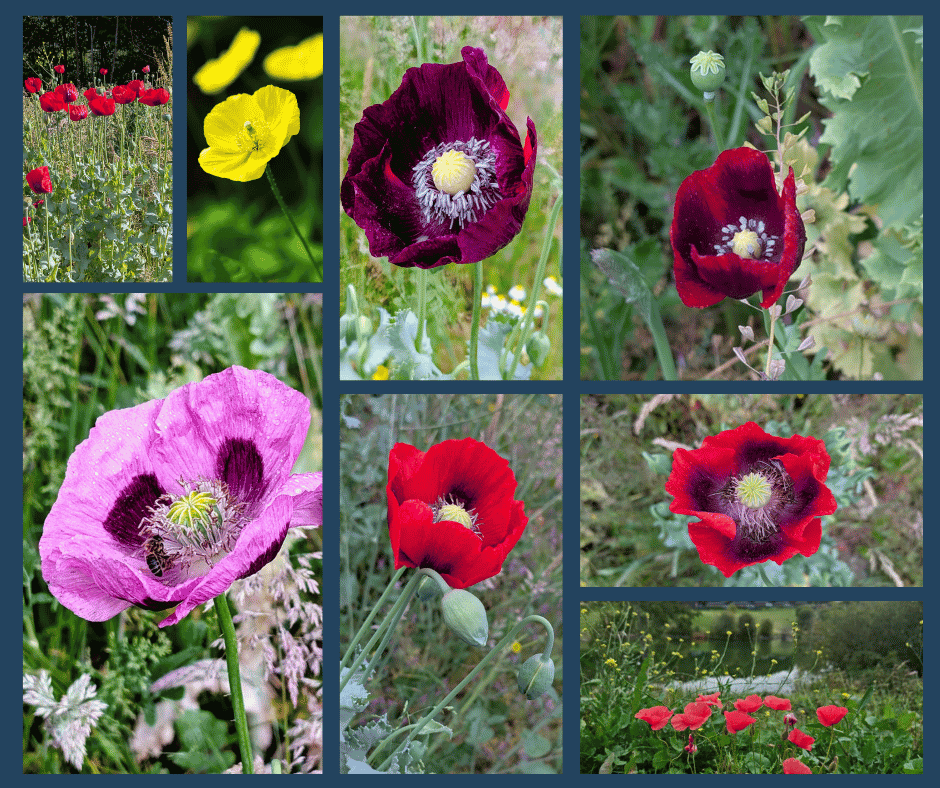
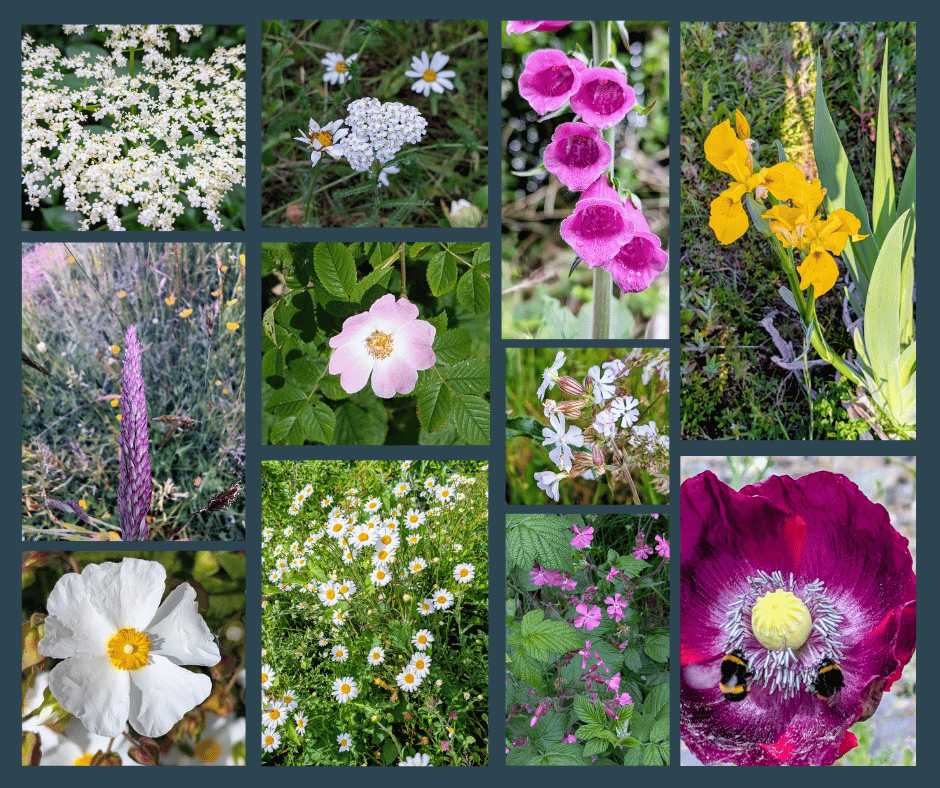
This year the park has offered a wonderful mix of deep crimson reds, rich velvety purples and our beautiful native Welsh poppies, their cheerful yellow petals brightening woodland edges and grassy banks.
Long before the red poppy became a symbol of remembrance, ancient cultures associated poppies with sleep, dreams and renewal. Their delicate petals open with the morning light before gently closing again each evening, as though the flower itself understands the importance of rest.
Discovering the deep purple poppies in the waste ground of the new touring caravan park this month was captivating, especially after the rain. The tiny droplets of water gave them an elevated feature, as the sunshine refracted light to create glistening stars.
Perhaps the lesson here is to bloom when the moment is right and rest when we need it most!
By looking down upon a group of poppies, you get to see nature’s painter’s palette. Then, just below the petals, the seed heads are waiting. One chapter ending as the petals fall, with another beginning as the seeds mature.
Fairy Lanterns Along the Woodland Path
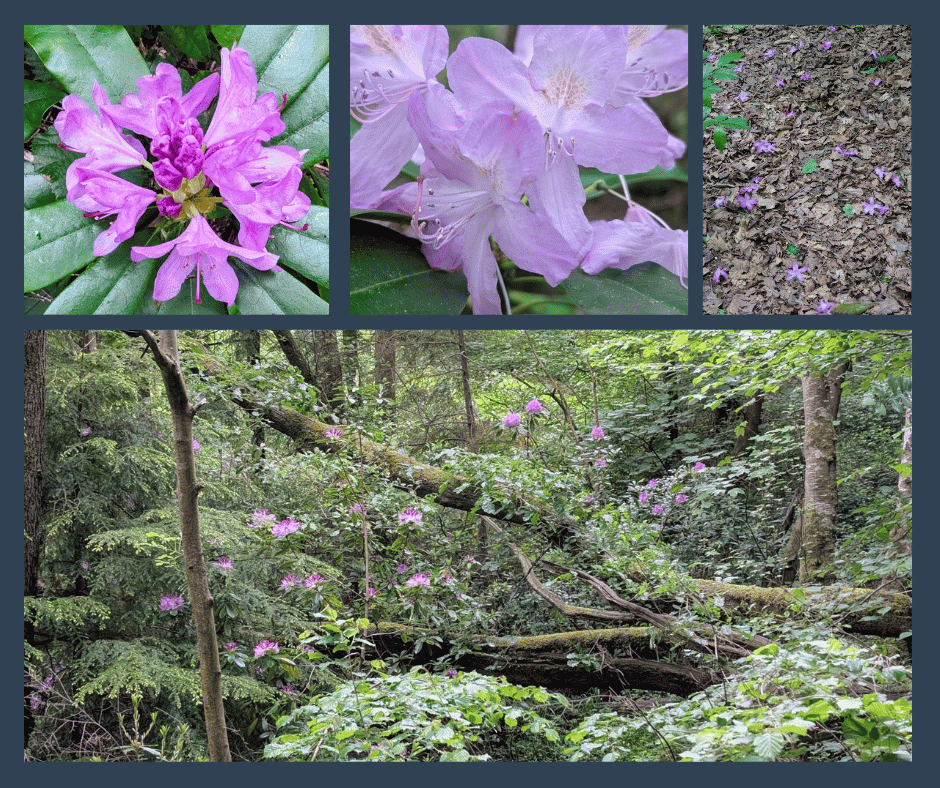
The rhododendrons have been spectacular this year. But it is not always the flowers on the branches that capture our attention.
Occasionally, it is the falling flowers and petals that make the biggest impact. In that special moment nature sprinkles its magic, as the fallen rhododendron petals form glistening lilac-pink stars upon the damp woodland path, offering little fairy lanterns carried by the breeze to guide us through the trees. In moments like this, nature doesn’t simply decorate the woodland. It tells its stories.
The woodland becomes less a place to walk through and more a place to wander, dream and imagine.
Nature’s Hidden Mathematics
Scientists have long recognised that many of nature’s most beautiful forms are not random. They follow repeating mathematical patterns that help plants and trees grow as efficiently as possible.
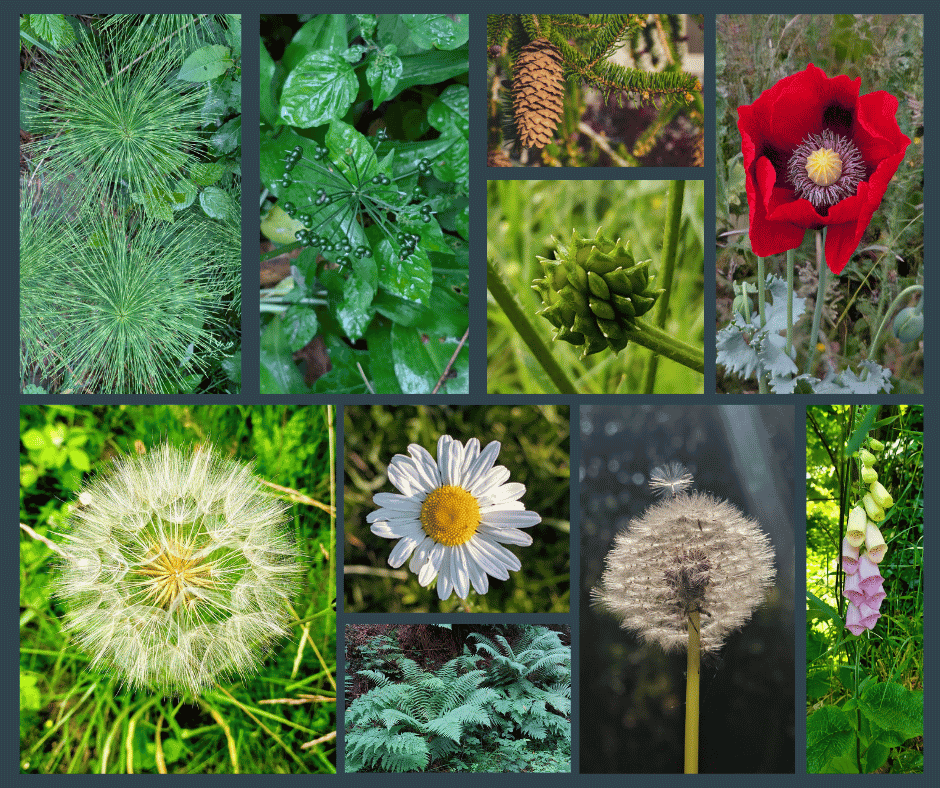
One of the best-known examples is the Fibonacci sequence, which is a series of numbers where each number is the sum of the two before it. This sequence appears throughout nature in the spirals of pine cones, dandelion clocks, plant stamens and even the arrangement of leaves around a stem.
These patterns allow plants to maximise sunlight, collect rainwater and pack seeds into the smallest possible space with remarkable efficiency.
Nature also favours symmetry, where one half mirrors the other.
Many flowers, butterflies and leaves display bilateral symmetry, while others, such as daisies and dandelions, radiate from a perfect central point. This balance isn’t simply beautiful, it helps attract pollinating insects and supports healthy growth.
Science suggests our brains are naturally drawn to symmetrical patterns because they often indicate health, balance and order in the natural world.
There is growing research within environmental psychology suggesting that humans instinctively respond positively to natural patterns.
These repeating forms are known as biomorphic patterns, and studies have shown they can reduce stress, improve concentration and promote feelings of wellbeing. It’s one of the reasons spending time in woodlands, parkland and gardens frequently leaves us feeling calmer without quite understanding why. Rather than overwhelming the brain, nature presents complexity in an organised, harmonious way.
So when you are out and about walking along Maes Mynan tracks, stand quietly and patterns will begin to reveal themselves. The perfect symmetry of a dandelion clock, the intricate veins of a leaf, the spirals hidden within pine cones, the radiating coils of the horsetails and the repeating textures of bark all follow designs. These are just a few to look out for. Scientists have studied nature’s patterns for centuries. With mathematical sequencing, plants grow with extraordinary efficiency. Perhaps this is one reason we find nature so calming. Our minds instinctively recognise its order, balance, and harmony long before we consciously notice it. It is little wonder that artists, ceramicists, architects, and textile designers have borrowed from nature’s patterns for generations, finding endless inspiration in its quiet perfection.
Nature is perhaps the greatest artist and designer of them all.
Woodland Secrets
Walk deeper into the woodland and you begin to discover plants whose stories stretch back far beyond our own.
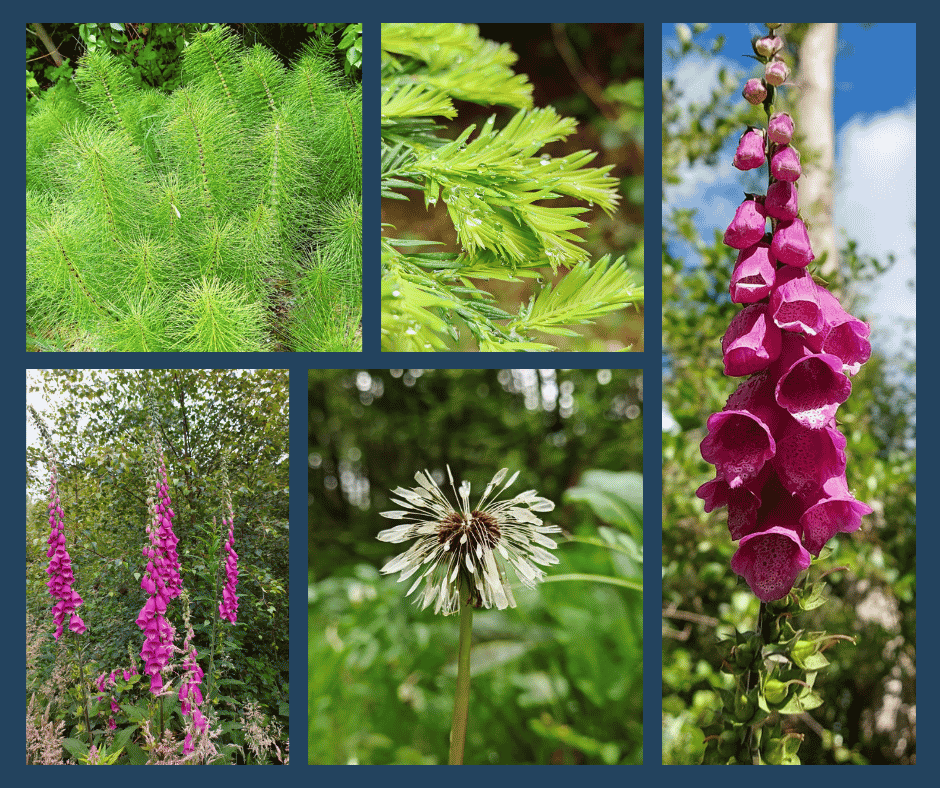
Along the damp edges of the paths, Horsetail rises like miniature green forests. The symmetry is remarkable. Nature has designed their structure to maximise light and spore production, but aesthetically they could almost be a piece of contemporary sculpture. Even one of Earth’s oldest plants still follows nature’s timeless blueprint, proving that beauty and function have always gone hand in hand.
Remarkably, its ancestors grew more than 300 million years ago, long before dinosaurs walked the Earth. Vast forests of giant horsetails once covered the planet, eventually forming many of the coal seams beneath our feet today. To stand beside one is to recognise not only its mathematical synergy but also a living piece of history.
Nearby, tall spikes of deep pink foxgloves sway gently in the breeze. These beautiful flowers are biennials, spending their first year quietly building leafy rosettes close to the ground before producing their magnificent flowering stems in the second. Perhaps that explains why they seem particularly abundant this summer.
Folklore tells us foxgloves were known as Fairy Gloves. Some believed woodland fairies wore them upon their tiny hands, while others said foxes slipped them over their paws to silence their footsteps as they crept through the undergrowth.
Then come the teasels.
Another remarkable plant whose leaves join perfectly around the stem, creating natural cups that collect rainwater. Birds drink from them. Insects find refuge within them. Old country tales even suggested fairies paused here to drink after dancing beneath the moonlight. Whether truth or folklore, one cannot help but admire such ingenious design.
Where Giants Whisper
Eventually, our nature’s walk this June finds the path that leads towards one of the quietest places within Maes Mynan Park.
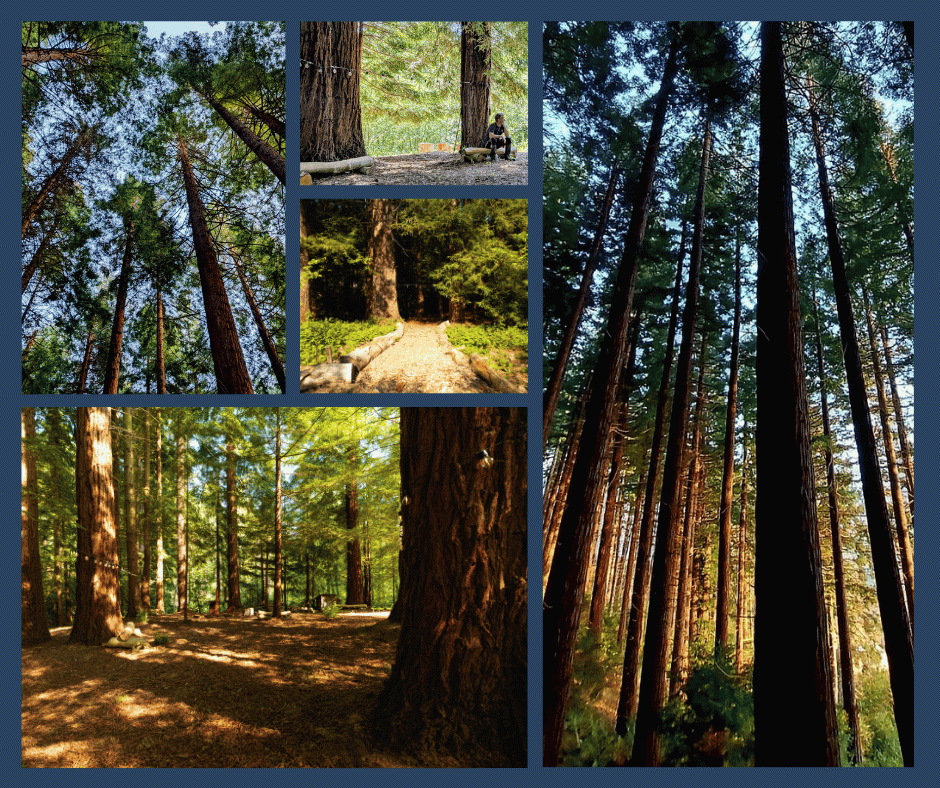
The Sequoia Grove.
Here the towering trunks glow rich amber as the evening sun catches their reddish bark through the long days of June, the air changes, it feels cooler, stiller and almost reverential.
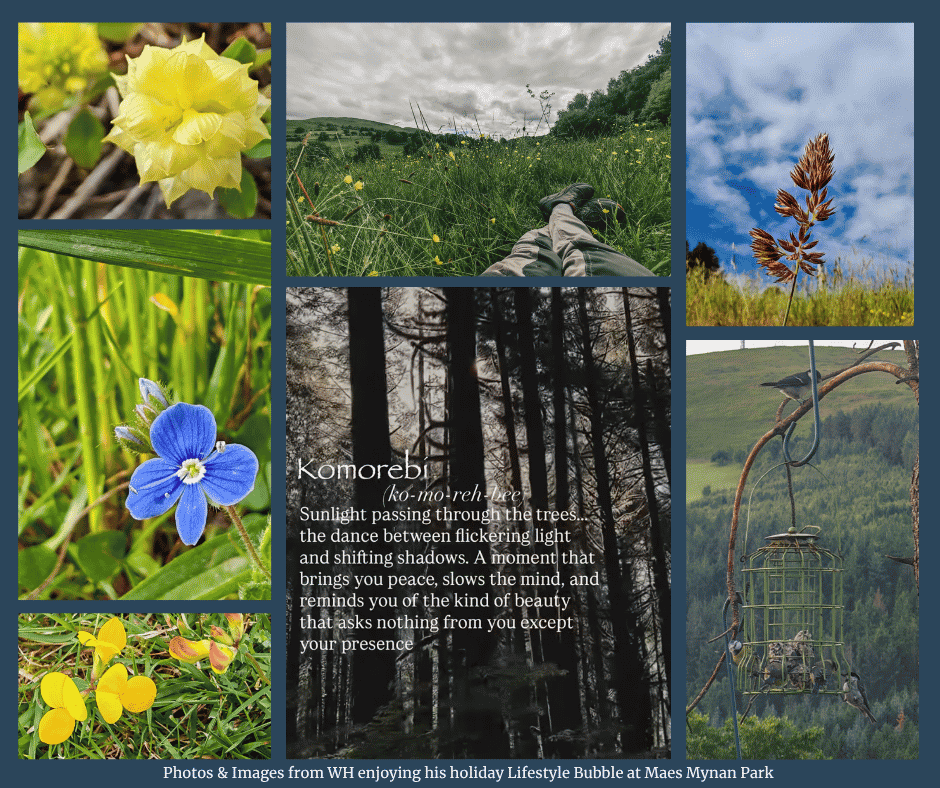
Nearby, within Adam & Verien’s Acorns & Giants woodland space, handcrafted benches fashioned from fallen trees invite us to pause. Here, sit for a while. Look upwards and see how the great branches spiral towards the sky. Take time to notice how shafts of sunlight filter through the canopy. Listen, not simply with your ears, but with your whole attention. These are moments that cannot be rushed because when you sit, watch, listen and see, you feel calm, collected and at peace. The scent of the trees and their dropped pine leaves also help you relax: so take time to inhale and exhale until you feel that calmness wash over you.
June’s Wildflowers
Every path seems to offer another discovery.
Around the lakes, the elegant yellow flags of the water iris stand proudly at the water’s edge, while broad green lily pads start to spread steadily across the surface, quietly building anticipation for the flowers that will hopefully follow soon.
Buttercups scatter gold across the lawn and banks, while Oxeye daisies nod gently in the breeze along the banks of the lakes and along the paths around the Park.
Red clover hums with visiting bees. Bird’s-foot trefoil glows yellow among the grasses. Herb Robert, self-heal and meadow cranesbill quietly weave colour into the rugged edges, slate paths and woodland edges, taking over if you have a care to look. Each flower plays its own part. Individually they are beautiful. Together, they all become something extraordinary.
The Theatre of Wildlife
Nature is never still at Maes Mynan Park. Even on the quietest of days, there is a fascinating theatre unfolding around the lakes, parkland and woodland if you simply pause long enough to watch.
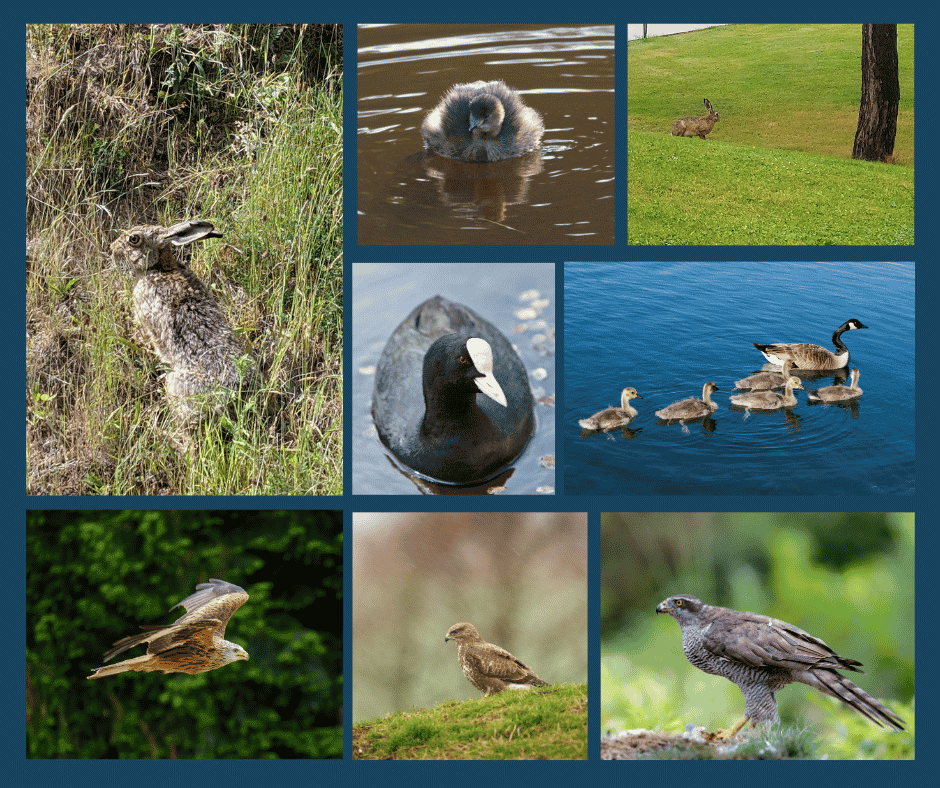
Our growing family of brown hares has become a particular delight this summer. More frequent sightings around the office and parkland suggest their burrows are tucked away somewhere nearby, safely hidden among the long grasses and wild banks. Their remarkable camouflage makes them almost impossible to spot until they suddenly spring into motion. One moment they are invisible, the next they are bounding effortlessly across the cut grass and fields, their long ears catching every sound, and their big eyes missing nothing! They have become one of the park’s most treasured residents.
Life on the lakes has been equally rewarding. Earlier this spring, a proud pair of Canada geese carefully shepherded their five fluffy goslings across the water. Week by week we have watched them grow, protected by vigilant parents who have guided every step of their journey towards independence.
If you listen carefully, another family announces its presence long before it is seen. The distinctive whinnying calls of the little grebes, often known as “dabchicks”, carry surprisingly far across the lakes. Small and secretive, they skim quietly over the water before disappearing beneath the surface in search of food, often leaving only gentle ripples behind.
Along the reed-lined shallows, the ever-cautious coots are also raising their young. Their chicks, with fiery orange and red faces, are easy to miss unless you slow your pace and watch patiently as they paddle close to the margins under the careful eye of their parents.
Above it all, the skies tell their own story.
The graceful red kite circles effortlessly on warm thermals before suddenly dipping low across the lakes in search of its next meal. Buzzards are never far away either, their familiar mewing calls drifting across the valley. Occasionally, however, the peaceful scene gives way to dramatic aerial encounters, as buzzards defend their territory against the elusive goshawk from the Sequoia woodland, or find themselves mobbed by determined crows refusing to surrender their patch of sky.
And, across the valley, the unmistakable call of the cuckoo continues to echo from the slopes of Moel y Parc — perhaps the true sound of a British summer, reminding us that, although often unseen, it is still there.
All of these treasures remind us that nature is not only peaceful; it is wonderfully alive. Every creature has its place, every call has its purpose, and every day offers another story for those willing to stop, look and listen.
The Lifestyle Bubble
We often speak about creating a Lifestyle Bubble at Maes Mynan Park.
It is not a place to escape life. It is a place to experience life differently. A place where phones stay in pockets a little longer. Where conversations become unhurried. Where birds replace traffic. Where the warm air accentuates the scents of the flowers and Sequoia pine needles. Where evenings stretch into golden light beneath towering trees and the wild honeysuckle fills the air. Where you sleep more deeply, breathe more slowly and notice more. Perhaps that is the greatest gift nature gives us. Not an escape from life…but a gentler way of living it in today’s busy world. Is this not what we are all dreaming of?
A Thought from the Maes Mynan Park This Month
Nature never asks us to hurry.
It simply invites us to notice.
Perhaps peace begins not with finding somewhere new to go…
…but with learning to see what has always been there.
Is it your time to find a countryside retreat – a holiday home that gives you what you need to switch off and recharge? The opportunity to create your very own Lifestyle Bubble and a space that allows you to breathe? Please get in touch if the timing is right for you.
Maes Mynan Park – a hidden gem with stunning views, lakeside lodge plots and elevated static caravan holiday home plots. 4-miles from junction 31 of the A55 North Wales Expressway.
Misty Waters Holiday Park – a quiet countryside holiday park with large open green spaces and big skies. 1-mile from junction 31 of the A55 North Wales Expressway.
acornleisure.com | 01352 720808 | info@nullacornleisure.com | Contact Page | Holiday Homes For Sale
Many thanks to WH who keeps me inspired for our Nature’s Notes series of posts.
Photo Credits WH, LB & VW.